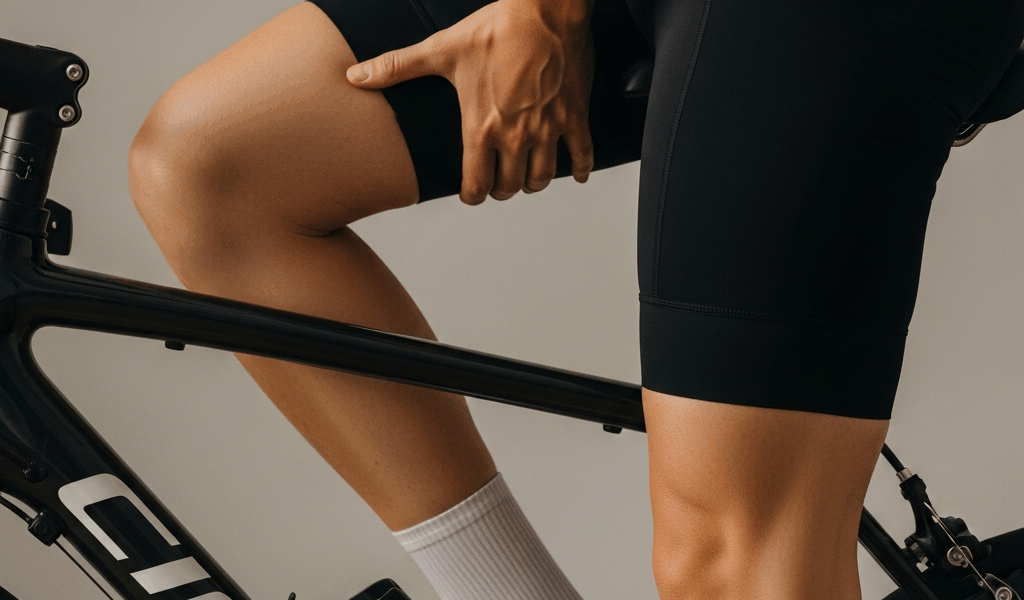
Bike Saddle Height Has Started getting harder to follow with all the Conflicting Advice Flying Around
As someone who spent three months blaming their fitness for burning quads and wrecked knees, I got hands-on with saddle height the hard way. Turned out my saddle was sitting nearly two inches too low the entire time. Don’t do what I did. Today, I will share it all with you — the sensations, the fixes, the things nobody mentions until you’ve already done them wrong.
Most guides drop you straight into the 109 percent inseam formula before you’ve even described your problem. Useful, sure — if you’re a numbers person. But when your lower back is screaming after a 45-minute commute, a measurement chart doesn’t exactly soothe the ache. This guide starts with what your body is actually telling you, then moves toward the fix.
Signs Your Saddle Is Too High
A saddle set too high creates a pretty specific cluster of problems. Your hips rock side to side while pedaling. Not subtly — enough that you can feel your sit bones sliding around and your upper body swaying to compensate. Unstable. Like the seat isn’t holding you where it should.
Your legs feel stretched at the bottom of the stroke. You’re reaching for the pedals rather than moving through a natural range of motion. Some riders describe it as doing tiny yoga stretches on every downstroke. That elongated, grasping sensation is the red flag worth paying attention to.
Dull lower back tightness starts creeping in around the 20 or 30-minute mark. Not sharp — more like a slow-building tension that lingers well after you’ve dismounted and gone inside. Your hamstrings and lower back are being recruited to compensate for a position they weren’t designed to hold that long.
Here’s a sneaky one most people miss: heel-to-toe contact shifts. Your heel might barely graze the pedal at the 6 o’clock position, or your toe levers up unnaturally at the top of the stroke. Your foot isn’t neutral. That’s your saddle talking.
Signs Your Saddle Is Too Low
A saddle sitting too low hits different. Anterior knee pain — dull aching right around the kneecap — is the most common complaint. It shows up around the 20 or 30-minute mark, lingers through the next day, sometimes two. I rode like that for longer than I’d honestly like to admit.
Your quads burn out way ahead of schedule. Legs feel heavy and dead earlier in the ride than your cardio fitness would explain. That’s because a low saddle forces more knee bend on every single stroke — your quads are effectively doing extra work on every revolution, session after session.
There’s also a cramped, boxed-in quality to it. Knees tracking toward your chest instead of stacking over the pedals. Some people say it feels like crouching rather than actually riding. Your torso pitches forward more sharply. Everything feels compressed and vaguely wrong.
Power disappears, too. Climbs feel sluggish. Sprints feel weak even when your legs aren’t exhausted. A compromised knee angle just can’t generate force efficiently — you’re working hard and not going anywhere fast. That’s what makes proper saddle height so endearing to us cyclists. A half-inch of change genuinely transforms the ride.
How to Find the Right Saddle Height
Start with the heel-on-pedal method. Simple, repeatable, costs nothing. Sit on the saddle in your normal position, unclip — or just rest your foot if you’re on flats — and place your heel on the pedal at the 6 o’clock position. Your leg should reach nearly straight without locking out. A 25 to 30-degree bend at the knee. Hips level. No rocking.
When you clip back in and place the ball of your foot on the pedal, the bend increases slightly. That’s correct — you want roughly 35 to 40 degrees of knee bend at the bottom of the stroke. The difference between heel contact and ball-of-foot contact accounts for that change in angle.
You can cross-check with the 109 percent formula: multiply your inseam measurement by 1.09, then set saddle height to that figure measured from the center of the crank axle to the top of the saddle. I’m apparently a 31.5-inch inseam and that formula works for me, while pure feel-based adjustment never quite got me dialed in. Your mileage will vary — literally. Cleat position shifts the math on clipless setups, and everyone’s proportions are different.
Speaking of cleats — if you’ve recently moved them, that alone can change how saddle height feels without touching the saddle itself. Move a cleat forward and the saddle effectively feels lower. Move it rearward and it feels higher. Worth checking before you start raising and lowering the post.
How to Adjust Your Saddle Height Safely
First, you should mark your current saddle height — at least if you want a reliable baseline to return to. A strip of painter’s tape wrapped around the seatpost just below the clamp takes about four seconds and has saved me twice.
Loosen the seat post clamp bolt — usually a single 5mm allen bolt on the back or side of the seat tube. Don’t remove it entirely. Just loosen enough that the post slides with firm hand pressure. Quick-release clamps twist counterclockwise.
Small moves only. Three to five millimeters at a time. Probably sounds trivial — it isn’t. A genuine half-inch shift in saddle height reorganizes your entire position and can feel dramatic on the bike. I once dropped mine nearly a full inch trying to fix knee pain fast and immediately created hip rocking instead. Tiny adjustments might be the best option here, as saddle fitting requires patience. That is because your body needs a short ride to actually register whether the change helped.
After each adjustment, tighten the clamp fully — torque specs for aluminum posts are usually around 5 Nm, so snug but not cranked — then take a 10 or 15-minute spin. Not a full session. Just enough to evaluate the specific symptom that was bothering you. Does the knee ache ease? Is the hip rock gone? A few short test loops beats one long suffering ride every time.
When the Problem Isn’t Actually Saddle Height
Worth mentioning before anything else.
Saddle fore-aft position — how far forward or back the saddle sits along the rails — can mimic height problems convincingly. A saddle pushed too far forward creates knee pain almost identical to a low-saddle setup. Too far back produces hip rocking that looks exactly like a high-saddle problem. The fix there involves sliding the saddle forward or rearward in small increments, not touching the height at all.
Saddle tilt matters more than people expect. A nose angled even a few degrees upward creates pressure and discomfort that genuinely feels like a height issue. Same with a nose that dips down. Both are adjusted via the bolts on the saddle rails under the seat — usually a 4mm or 5mm allen key does it.
But what is a professional bike fit? In essence, it’s a structured assessment combining physical measurements, flexibility testing, and real-time video analysis of your pedal stroke. But it’s much more than that — a good fitter catches asymmetries, leg length discrepancies, and cleat issues that no amount of self-diagnosis will surface. If you’ve adjusted height, rechecked cleat position, and the symptoms are still hanging around — or presenting in ways that don’t quite match anything described here — book the session. Fitters typically run $100 to $200 depending on the shop. Worth every dollar if you’re riding more than a few times a week.
If adjusting the saddle does not resolve hand pressure or upper-body discomfort, check the signs your handlebar height or reach may be wrong before changing more parts.



Stay in the loop
Get the latest safe cycling zone updates delivered to your inbox.