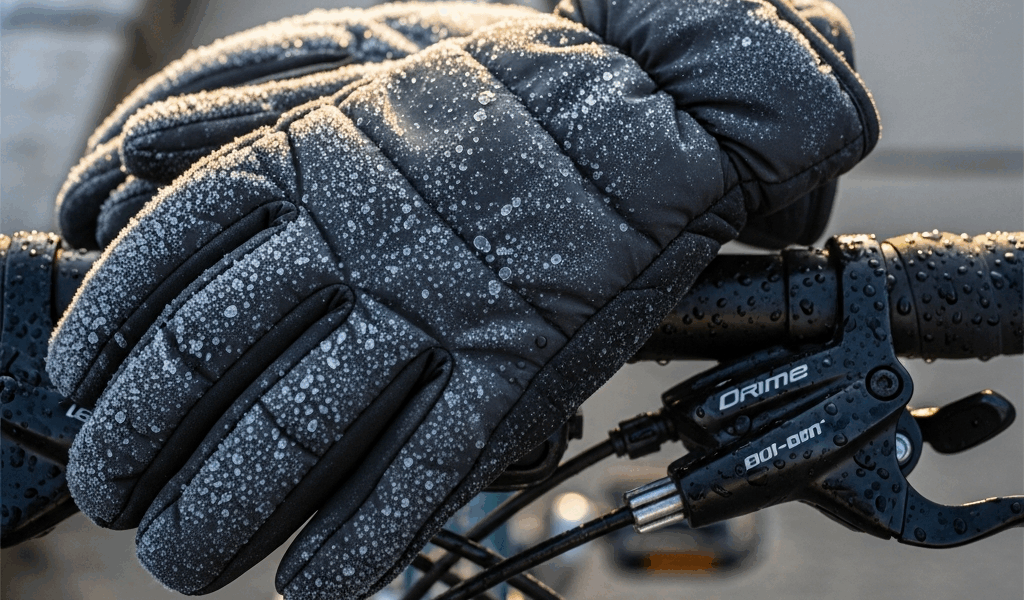
Why Your Regular Gloves Are a Safety Problem in Winter
Winter bike commuting has become tricky with all the gear advice flying around. As someone who rides year-round through sleet, black ice, and the kind of January mornings that make sensible people drive, I put in the hours studying keeping your hands functional — not just warm. Today, I will share it all with you.
This article includes affiliate links. We may earn a commission at no extra cost to you.
Important part first. This isn’t a comfort conversation. It’s a stopping-before-you-hit-that-car conversation. A cycling safety researcher clocked commuters wearing inadequate gloves at 0.3–0.5 seconds slower on braking response in cold conditions. That’s 20–30 feet at city speeds. Twenty. To. Thirty. Feet.
Numb fingers don’t just hurt — they lag. You think you’re grabbing the brake lever. Your fingers are somewhere behind that thought, still catching up. The wet handlebars are the obvious hazard. The neurological delay is the one that actually gets you.
Regular winter gloves — the $18 Costco pair, the fleece things you wear to walk the dog — trade dexterity for bulk. Your fingers end up feeling like hot dogs stuffed in a bun. You can’t feel the lever. You can’t find the shifter. Try unlocking your bike with those things on. Try pulling your phone out of your jersey pocket. You’re suddenly fighting your own hands. Avoid the path I took — I rode three full winters in unsuitable gloves before I understood why my braking felt sluggish in February.
What to Actually Look for in a Winter Commuter Glove
Not all winter cycling gloves are built the same — especially when your job is stopping in traffic rather than cresting some ridge in Aspen. So, without further ado, let’s dive in.
Waterproofing vs. Water Resistance
But what is the difference, really? In essence, waterproofing uses a sealed membrane — Gore-Tex being the standard — that blocks water for hours of sustained exposure. Water resistance just means the fabric sheds initial moisture. You’ll still get damp. Eventually soaked. But it’s much more than a marketing distinction — it’s the difference between dry hands at mile three and wringing out your gloves at the office.
For a sleet commute, you want waterproofing. For light rain under 30 minutes, water resistance saves you money and cuts down on weight. Know your climate before you spend $90 on membrane technology you don’t need.
Dexterity for Brake Levers and Shifters
This is where most glove guides fall apart. They’re written for people coasting along a greenway. Commuting is constant braking and shifting — stop signs, pedestrians, that guy who opens his car door without looking. Look for gloves with reinforced fingertips made from thinner material: neoprene or synthetic leather work well, even when the rest of the glove uses heavier insulation. Some brands stitch grip dots onto the palm and index finger specifically for lever contact. Check the cuff too — if it bunches fabric under your palm near the lever, you’ll feel it every single stop.
Touchscreen Compatibility
Your phone is your lock combination, your route, your emergency contact. I’m apparently sensitive to bad touchscreen gloves, and the conductive-thread version works for me while the thin-leather-panel version never registers reliably. The thread degrades faster too — after about 60 wet commutes, mine started requiring three taps where one used to work. Test them in the store if you can. Not every “touchscreen compatible” label means the same thing.
Cuff Length and Jacket Overlap
Cold air finds gaps. The gap between your glove cuff and jacket sleeve is basically a wind tunnel aimed directly at your wrist. Longer cuffs — 4 to 5 inches — overlap your jacket and seal that gap. Shorter ones let wind in. Measure wrist to knuckle, add an inch. That’s your minimum cuff length. Simple math. Huge difference on a 28°F morning.
Layering for Variable Temperatures
You leave at 28°F. It climbs to 42°F by the afternoon ride home. One pair of gloves doesn’t adapt to that swing well. Keep a thin merino wool or synthetic liner glove in your bag — I use a $14 pair from REI, nothing fancy. Layer it under heavy gloves on cold mornings, ditch the outer shell if it warms up. Honestly, this trick saves money and spares you from arriving at work with sweat-soaked palms or fingers that ache for an hour after you get inside.
Best Winter Cycling Gloves for Commuters Right Now
Mild Cold (32–45°F) — Giro Rivet II
The Giro Rivet II runs $54.99. Leather palm, synthetic leather backing, neoprene cuff — it’s a hybrid built for the 30–40°F zone most urban commuters actually live in. Water-resistant, not waterproof. Water beads off the surface but won’t stay dry past an hour in heavy rain. That’s the honest limitation. The brake lever feel is excellent though — you can sense cable tension through the index fingertip without removing the glove, which matters more than most reviewers acknowledge. Touchscreen on index and thumb. Below 25°F, your fingers will let you know they’re unhappy. That’s what makes the Rivet II endearing to us mild-winter commuters — it doesn’t pretend to do everything.
Hard Winter (10–32°F) — Pearl Izumi Cyclone Gel
The Pearl Izumi Cyclone Gel ($79.95) uses Gore-Tex waterproofing with 200g synthetic insulation in the palm. The cuff hits 4.5 inches — seals the wrist gap cleanly against most jacket sleeves. Gel padding absorbs vibration on rougher pavement and adds grip. The dexterity trade-off is real: thick insulation means slightly mushier brake feel. The reinforced fingertips on index and middle finger with grip dots compensate for most of that. Functional down to about 5°F with regular finger movement. Below that, you’re adding liner gloves.
Wet Commute Priority — Sealskinz Waterproof All Weather
Living somewhere that’s wet more than cold? Sealskinz Waterproof All Weather Cycle Glove ($69.99) built their reputation on membrane technology. Fully waterproof. They breathe better than most Gore-Tex alternatives — less sweat accumulation on longer rides. The tradeoff: warmth ceiling sits around 28–40°F. The cuff is shorter at 3.5 inches, which works if your jacket sleeves run long. Touchscreen registers reliably. Dexterity is acceptable — not exceptional, but nothing that costs you reaction time at a stoplight.
Best Overall Commuter Value — Dakine Covert
The Dakine Covert costs $44.95. That’s it. That’s the first selling point. DWR coating handles light to moderate rain. Synthetic insulation rated to 15°F. Foam grip grid on the palm. Four-inch cuff. Touchscreen on index and thumb. I’m apparently a fast-drying-glove person, and these hang on a hook at work and come out mostly dry by lunch — which matters when your afternoon commute starts at 5pm in the dark. They won’t survive a sustained downpour. But for variable winter conditions on a typical city commute, they’re reliable enough to own a backup pair at $44.95. That’s what makes the Covert endearing to us budget-minded commuters — it’s honest about what it is.
Extreme Cold (Below 10°F) — GORE BIKE WEAR Universal Thermo
At this level, you’re running GORE Windstopper membrane plus 250g synthetic insulation. $94.99. Five-inch deep cuffs. Heavy palm padding. Reinforced fingertips. The windproof membrane is the feature that earns the price — wind steals heat faster than ambient cold does. Overkill for most commutes. If you’re riding in Maine or Minnesota in February, they’re insurance. Brake response stays solid with practice, though dexterity takes a small hit compared to lighter gloves. Worth it when the alternative is frostbite at mile two.
How to Keep Gloves Working Safely All Winter
Buying the right glove is step one. Maintaining it is step two — at least if you want it to last more than one season.
Dry them properly. Skip the dryer — heat destroys insulation and degrades membranes faster than wear does. Stuff them with newspaper and swap the paper every hour if they’re fully soaked. Hang them in a warm room otherwise. Proper drying takes 12–24 hours. Rushing it cuts the glove’s useful life roughly in half. I killed a $79 pair of Pearl Izumis in six weeks doing this wrong. Spare yourself the wrong turn I took.
Replace them when grip fails. If your fingers slip on the brake lever after the gloves are dry, the palm coating is worn through. This typically happens around 80–100 commuting days. Mark it on a calendar. You genuinely cannot feel grip degradation until you’re already in trouble.
Keep a dry backup pair at your office or in your bag. Wet gloves at the midpoint of your commute cool your hands faster than bare skin would. A $20 backup pair beats frostbite. Not a metaphor. Actual frostbite.
Layer for extreme cold. A thin merino wool liner under your main glove adds insulation without adding meaningful bulk. The liner handles sweat. The outer glove handles wind. You stay dry and warm. Simple system, genuinely works.
Which Winter Glove Is Right for Your Commute
Ask yourself three questions — at least if you want to skip the trial-and-error phase I went through across four winters and roughly $300 in wrong gloves:
- What’s your average winter temperature? Below 25°F, Pearl Izumi or GORE. Between 25–40°F, Giro or Dakine. Above 40°F with consistent rain, Sealskinz wins.
- How wet is your climate? Steady rain means waterproofing is worth the extra $20–30. Occasional snow or light drizzle means water-resistant is fine.
- How long is your commute? Under 20 minutes, lighter gloves hold up. Over 30 minutes, invest in real insulation and cuff coverage.
Start with the Dakine Covert if you’re unsure. $44.95 is a reasonable tuition payment. It handles most conditions, forgives bad weather decisions, and if it falls short, you’ll know exactly which direction to upgrade — warmer, drier, or both.


Stay in the loop
Get the latest safe cycling zone updates delivered to your inbox.