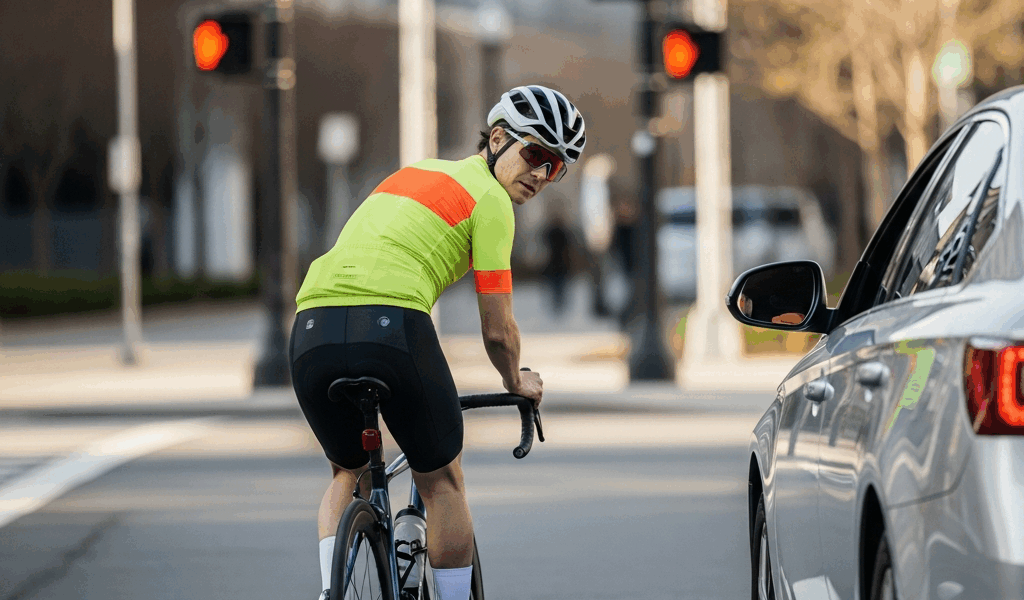
How to Avoid Getting Hit by a Car While Cycling — What the Data Actually Shows
Cycling safety has turned into a moving target with all the conflicting advice flying around. Wear a helmet. Be visible. Follow traffic laws. Fine — but none of that tells you how crashes actually unfold. As someone who’s been commuting by bike through Chicago for nine years, I taught myself the working side of bike-car collisions the hard way — first through instinct and vague dread, then through a deep dive into NHTSA’s crash typology data. What I found genuinely surprised me. The danger isn’t random. It’s patterned. And patterns can be studied, anticipated, and beaten.
This isn’t about surviving crashes. It’s about not being in them.
The Three Scenarios That Cause 75% of Bike-Car Crashes
Ask most cyclists what terrifies them most on the road and they’ll say getting rear-ended by a car they never saw coming. Understandable, honestly — it feels like the most helpless version of a bad day. You’re just riding along, some distracted driver comes up fast, and that’s it. Nightmare scenario.
It’s also not what’s actually killing cyclists at scale.
But what is killing them? In essence, it’s three specific crash types — the right hook, the left cross, and dooring. But it’s much more than that. NHTSA crash data, cross-referenced with analyses from the League of American Bicyclists and several university transportation studies, consistently shows these three account for roughly 70-75% of urban bike-car collisions. All three happen at low speeds. All three happen in broad daylight. And all three are preventable once you understand what you’re actually looking at.
The rest of this guide is built around those three scenarios — plus rear-end collisions, which deserve their own section precisely because cyclists wildly overestimate that risk while ignoring the top three.
Right Hook — The Most Common and How to Prevent It
The right hook is the dominant crash type in urban cycling data. The setup: you’re moving straight through an intersection, riding in a bike lane or along the right side of a lane. A car beside you — or slightly ahead — turns right directly across your path. The driver checked the mirror, didn’t register you, and committed. You either hit their passenger door or they clip your front wheel.
I’ve had two near-misses exactly like this on Milwaukee Avenue — both within six blocks of each other. The second time I was doing about 14 mph and locked up my brakes so hard I nearly went over the bars. The driver never even looked back. Didn’t know it happened. I sat in the bike lane for a solid minute just breathing.
Where You Position in the Lane Matters Enormously
The single most effective prevention here is lane position at intersections. As you approach, move left within your lane — or take the full lane if traffic allows. This accomplishes two things at once: it pulls you out of the right-turn conflict zone, and it forces any driver wanting to turn right to either wait behind you or pass you clearly before committing to the turn.
Never pass a slow-moving or stopped vehicle on the right at an intersection if there’s any chance it could turn. This is where cyclists get hurt — a car sitting at the line that’s about to turn right reads as “stopped,” not “dangerous.” Pass it on the left, or just wait.
Eye Contact Is a Real Safety Tool
Make eye contact with drivers at intersections. Turn your head toward them. This does more than confirm they see you — it triggers something social. A driver who’s made eye contact with you is far less likely to turn into you, partly because they now consciously know you exist, partly because there’s some basic human instinct against hurting someone you’ve just looked at directly.
If you can’t get eye contact — driver’s looking down, looking left, fumbling with something — slow down. Treat that car as if it’s about to turn right, because you genuinely don’t know it isn’t.
Timing and Speed Adjustments
- Approach intersections at a speed you can stop from within 10-15 feet
- If a car ahead is signaling right, drop back and let it complete the turn before you proceed
- Watch the front wheel of the car — it moves before the whole car does
- Assume a turn signal is missing even when it isn’t — plenty of drivers don’t bother
Left Cross — When They Don’t See You Coming
The left cross hits you head-on — which is its own special category of awful. You’re moving through an intersection, a car approaches from the opposite direction, turns left, and goes straight into your path. The driver’s attention is on the gap in oncoming car traffic. They find the gap, commit to the turn, and you — a cyclist moving at 15 mph with a fraction of the visual profile of a car — simply weren’t in their scan.
This crash type disproportionately nails cyclists moving at higher speeds, which compounds things. The faster you’re going, the less time the driver has to register you even on the off chance they glance your way.
Your Front Light Is Not Optional — Even in Daylight
Run a front light during the day. Always. Spare yourself the wrong turn I took — I spent years treating lights as a nighttime-only thing, which is exactly backwards for left-cross prevention. A flashing front light dramatically increases your visibility to oncoming drivers at the precise moment they’re scanning for gaps in traffic. I use the Cygolite Metro Pro 1100 — daytime flash mode, about $65, mounted on my handlebars every single ride regardless of conditions.
Scandinavian cycling research — from countries that mandated daytime running lights before most places even considered it — showed meaningful drops in cyclist-vehicle collisions after daytime light use became standard. The physics aren’t complicated: a flashing light catches peripheral vision in a way a static object simply doesn’t.
Reading the Intersection Before You Enter It
Here’s the part worth saying first, because this applies to both right hooks and left crosses — slow down before entering any intersection where you don’t have a clear read on traffic intent.
Look for:
- Oncoming vehicles slowing without an obvious reason to stop — they may be yielding to turn
- Front wheels of oncoming cars angled left — that car is about to go
- Drivers looking left at traffic gaps rather than straight ahead at you
- Any gap in oncoming traffic large enough for a car to turn through — drivers will use it
If you spot an oncoming car that might turn left, don’t accelerate. Move slightly right within your lane — yes, opposite of right-hook prevention, these are genuinely different moves for different scenarios. Slow to a speed where you can actually stop. If the car commits anyway, you need to be the one who walks away from the moment.
Dooring — The Urban Commuter’s Biggest Risk
Frustrated by how obvious the door zone danger seems in retrospect, I still spent an embarrassing chunk of my first two years riding straight through it anyway. The door zone is that three-to-four-foot strip immediately beside a parked car’s driver-side door — the space the door sweeps through when someone opens it from inside. Ride there, door opens in front of you, you have somewhere between 0.5 and 1.5 seconds to react. Most people don’t make it.
Dooring is probably the most underrepresented crash type in NHTSA statistics — many incidents don’t involve a moving vehicle and don’t get filed as motor vehicle crashes. Chicago’s city data, which captures these more granularly, consistently puts dooring in the top three injury mechanisms for urban cyclists. Apparently the national numbers just don’t reflect how bad it actually is.
Ride a Full Car-Door Width Away From Parked Cars
That’s roughly four feet from the side of parked vehicles. In a standard 12-foot travel lane with parking beside it, this often means holding a position that feels wrong — closer to the lane center, interacting with moving traffic behind you. That discomfort is the trade-off, and it’s the right one. A car that has to slow down because you’re holding lane-center position is annoying to the driver. A car door at 15 mph is a different conversation entirely.
You have the legal right to take the lane in virtually every U.S. state when riding within door-zone distance of parked cars is unsafe. This isn’t aggressive riding — it’s legal, it’s defensible, and it’s the move.
Scanning Parked Cars for Occupants
Develop this habit: as you pass parked cars, scan each one for the silhouette of a person in the driver’s seat. Brake lights mean the car just parked. Movement inside means someone’s about to do something. A side mirror angled slightly out means someone adjusted it from inside — recently. These are all warnings. Spot any of them, move further left and ease off the speed a little.
The scan becomes automatic within a few weeks of deliberate practice — it doesn’t cost you anything meaningfully once it’s baked in as habit.
Rear-End Hits — Less Common but Most Feared
Here’s the counterintuitive finding: getting struck from behind by a passing vehicle is one of the least common crash scenarios for urban cyclists. Multiple analyses of NHTSA’s Fatality Analysis Reporting System data put rear-end strikes at somewhere between 4% and 6% of urban bike-car crashes. On rural roads and highways the number climbs — but for the typical city or suburban cyclist, the rear threat is considerably lower than instinct suggests.
That said, rear-end crashes carry a higher fatality rate when they do happen, particularly on faster roads. “Less common” isn’t the same as “ignorable.”
Rear Radar Actually Works
The Garmin Varia RTL515 runs about $200 and mounts to your seatpost — it detects approaching vehicles up to 140 meters back and sends an alert to a paired device. Garmin head unit, phone, small dedicated display, whatever you prefer. It doesn’t prevent the crash, but it removes the psychological weight of riding without any information about what’s behind you. I’ve been using one for three years now. It genuinely changes what it feels like to ride roads without a bike lane — that’s what makes the Varia endearing to us data-driven urban cyclists who’d rather have actual information than just anxiety.
Visibility and Lane Position on Narrow Roads
The instinct on a narrow road without a shoulder is to hug the right edge — give cars maximum room and hope they pass cleanly. This instinct is backwards. Riding the edge of a narrow road means drivers try to pass without crossing the center line. They squeeze by with 12 inches of clearance because they’re avoiding oncoming traffic. That’s the scenario where mirrors clip helmets.
Take the lane. When you’re positioned in the center of a narrow road, drivers cannot attempt a pass without fully committing to crossing the center line — and most wait until it’s actually safe to do so. Your presence in the center forces better behavior rather than enabling dangerous squeeze-bys.
Combine this with:
- A rear light with daytime flash mode — the Cygolite Hotshot 100 is $30 and genuinely bright
- Reflective ankle bands or a vest — ankle movement catches eyes better than static reflectors
- A consistent, predictable line — no weaving, no sudden edge-hugging when you hear a car approaching
Where Fear and Data Diverge
The gap between what cyclists fear most and what actually causes crashes matters — because misplaced fear misallocates attention. Spending mental energy scanning your rear at every moment means you’re probably underinvesting in intersection awareness, which is where 75% of the danger actually lives. Use the Varia if you want rear-approach information without the cognitive overhead. Trust the data on where risk actually concentrates. Build your habits around the top three crash types — that’s where prevention has the most leverage.
Ride like every intersection is a negotiation. Because it is.

Stay in the loop
Get the latest safe cycling zone updates delivered to your inbox.