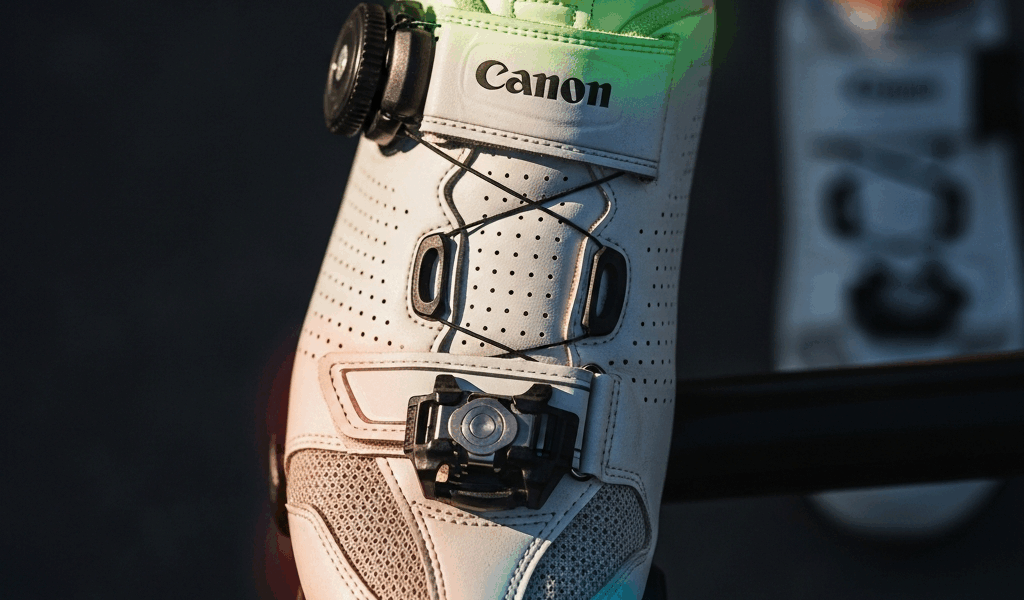
Why Cycling Shoes Cause Pain in the First Place
Cycling shoe pain has become harder to navigate with all the conflicting advice flying around. But the core reason is actually pretty simple — these shoes are built nothing like anything your feet have worn before. The soles are rigid. Carbon fiber, sometimes. Engineered to push 100% of your pedal power into the crank rather than absorbing impact the way a running shoe would. That stiffness is the entire point of the design.
The problem? When fit is off by even a quarter inch, your foot has nowhere to go. Regular sneakers forgive a loose fit. Cycling shoes punish it. Hard.
Then there’s the cleat system. Your foot gets bolted to the pedal in one fixed position — for hours. No microadjusting, no subtle weight shifts. Whatever angle your cleat locks you into, that’s your angle for the next 60 kilometers. A placement error that feels mildly annoying at mile 5 becomes genuinely unbearable by mile 20.
I learned this the hard way after buying a “premium” shoe online without trying it on. Paid around $180 for a pair of Shimano RC5s. Figured the pain would break down with use. It didn’t. It got worse every single ride until I finally pulled the cleats off and started over from scratch.
Pain in the Ball of Your Foot or Toe Box
This is the complaint I hear most — and honestly, it’s usually fixable within an hour.
The ball of your foot takes the most direct load while pedaling. When your cleat is mounted too far forward — toward your toes — all that pressure concentrates right there. Hot spots develop fast. Numbness starts creeping in around the 45-minute mark. By the end of the ride, you’re half-convinced something is seriously wrong with your foot.
Root causes—ball of foot pain
- Cleat too far forward. Most cyclists install cleats exactly where the manufacturer marks suggest. That default position tends to run too far front. Move your cleat back toward your heel by 3–5mm and reassess from there.
- Shoes too narrow. Even a half-size difference in width squeezes your metatarsal heads — the bones sitting at the base of your toes. What you feel is a sharp compression pain, almost like a pressure point that won’t release.
- Toe strap cranked too tight. The forefoot strap shouldn’t function as a tourniquet. If you’re tightening it all the way down just to stop your foot from sliding, that’s a cleat position issue — not a tension issue. Loosen it. Your foot should feel held, not strangled.
Fixes you can do today
Start with cleat position. Grab a 4mm hex key — that’s the standard for most cycling shoe cleat bolts — loosen them, and shift the cleat back toward your heel in 2–3mm increments. Snug the bolts back down and go for a 20-minute spin. Still hurts? Move back another 2–3mm. You’re searching for the point where pressure migrates away from your toes and settles somewhere in the middle of your foot.
Next, look honestly at your shoe width. Most brands run narrow — Shimano, Specialized, and Giro all lean toward European proportions. If your forefoot is wider than average, you might actually need a wide-fit model rather than just a larger size. Bont builds on a wider last and offers multiple width options. Shimano makes dedicated wide versions of several popular models too. Trying them on beats guessing from a size chart every time.
Third option: a metatarsal button insole. These are small domed inserts that sit under your midfoot, redistributing load away from the ball of your foot. They run around $30–50. They don’t work for everyone — but at that price, it’s worth the experiment before buying new shoes.
Arch Pain or Foot Collapse While Pedaling
This is the piece to know up front. Arch pain is usually the easiest problem to solve, and yet people suffer through it the longest before doing anything about it.
Stock cycling shoe insoles are essentially flat foam. Zero arch support built in. If your feet are naturally high-arched and rigid, fine. But if you have flat feet or any degree of pronation — your arch rolling inward during the pedal stroke — you’ll feel your foot collapsing inside the shoe somewhere around the 45-minute mark. Dull ache along the inside of the foot. Sometimes full cramping.
Root causes—arch pain
- Flat or low arches against stock insoles. Your foot wants to roll inward. The flat foam insole doesn’t resist that motion at all. The arch collapses, and the ache builds gradually until it’s impossible to ignore.
- Saddle height out of range. This one’s indirect but real. A saddle set too high or too low forces your foot into an unnatural angle on the pedal — and your arch compensates for that throughout every single stroke. Sometimes a basic saddle height adjustment, using your inseam measurement and a standard formula, clears up arch pain you’d blamed on the shoe entirely.
- Wrong shoe last for your foot shape. Shoes built on a curved last suit naturally arched feet. Shoes built on a straight last suit neutral or low-arched feet. Buy the wrong one for your anatomy and you get pressure points instead of support.
Fixes—arch support
Buy aftermarket insoles — at least if your arches are giving you trouble. Superfeet makes a cycling-specific version with genuine arch support for around $60. Powerstep is another solid option at a similar price. Custom orthotics exist if you want to go further. Pop the stock insole out, drop the new one in. That’s it. Most people notice a real difference within the first 30 minutes of the next ride.
If aftermarket insoles don’t move the needle, book a professional bike fit. An hour-long session runs $100–200 depending on the shop. A good fitter addresses saddle height, cleat angle, cleat fore-aft position, and reach all at once — and those small adjustments remove a surprising amount of cascading stress from your arches and lower legs.
Heel Slipping or Heel Pain on Long Rides
Your heel lifts inside the shoe with each downstroke. By mile 30, there’s a blister forming. By mile 60, you’re just trying to get home.
Heel slipping almost always means one of two things: the shoe is too large, or the retention system isn’t locked down correctly at the back of the foot.
Causes—heel movement
- Shoe sized too large. Your heel should sit flush against the back of the shoe — no gap, no lift. If there’s daylight between your heel and the cup, go down half a size.
- BOA or strap neglected at the heel. Most cyclists crank the forefoot strap tight and barely touch the heel. On BOA systems, dial that heel zone firm before anything else. On velcro, start at the heel and work forward. On laces, the heel-lock technique — threading laces through the dedicated heel loop before tying — makes a noticeable difference.
- Cleat positioned too far forward. This one surprises people every time. When the cleat sits too far front, your foot slides forward inside the shoe on the downstroke. The heel lifts as a direct result. Moving the cleat back toward the heel — even 3mm — can stop the slipping entirely.
Fixes—heel retention
Change your tightening sequence. Start at the heel, feel for your heel bone through the back of the shoe, and get that section snug before touching the midfoot or forefoot. It sounds minor. It isn’t.
If the slipping continues even after tightening, size down. Cycling shoes run noticeably large compared to street shoes — a half size is often the entire difference between slipping and locked in.
When the Shoes Are the Problem, Not the Fit
Sometimes the shoe itself is just wrong. Not the fit — the actual shoe. Look for: a cracked or delaminating sole, a BOA dial that spins freely without tightening, retention straps that won’t hold tension, or a last shape that fundamentally doesn’t match your foot anatomy.
A cracked sole means the shoe is done. Soles don’t repair — not structurally, not in any way that holds under pedaling load. A BOA dial that free-spins? Send it back under warranty. BOA has a lifetime guarantee on their dials and will replace them free.
I’m apparently a wide-forefoot-narrow-heel combination, and Bont works for me while Shimano’s standard last never did — I’d end up with hot spots on both sides of my forefoot by mile 25 no matter what I tried. Avoid the path I took of assuming all narrow-fit pain is a cleat problem.
Wide-fit options worth knowing: Shimano Wide, Bont, Lake, and Fizik all make wider lasts. They differ in where that width actually sits — some are wide at the heel, narrow at the toe box. Some are the reverse. Read reviews specifically from people describing your foot shape before ordering anything online.
One last thing worth saying plainly: most cycling foot pain is fixable without buying new shoes. Cleat position, aftermarket insoles, and tightening sequence together solve around 80% of cases. Work through all of those first. New shoes are the last resort — not the first one.



Stay in the loop
Get the latest safe cycling zone updates delivered to your inbox.