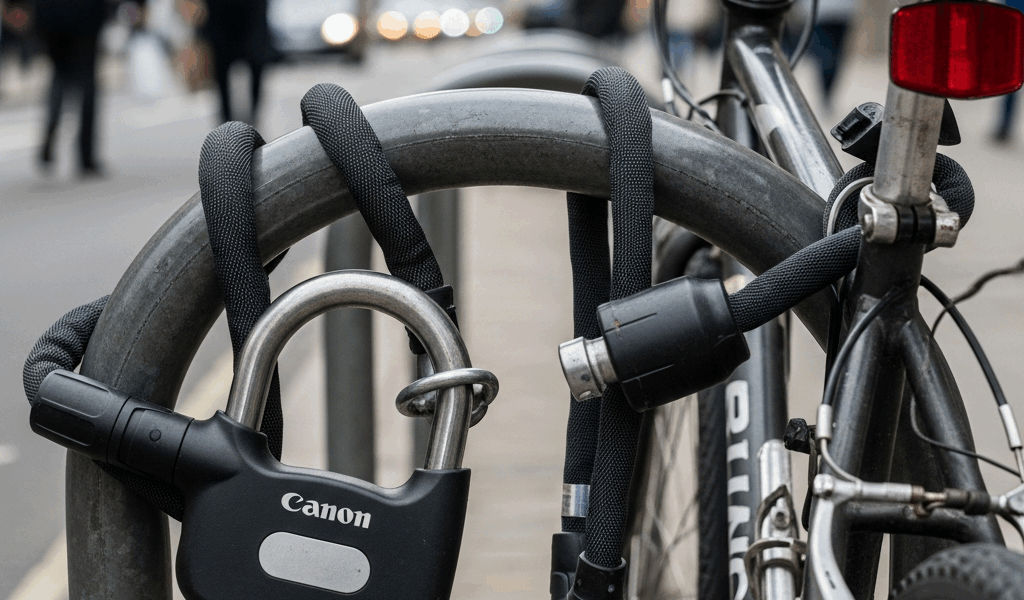
You are standing in a bike shop staring at a wall of locks, and the choice comes down to two: a D lock (also called a U-lock) or a heavy-duty chain lock. Both cost real money, both claim to be secure, and the wrong choice for your situation leaves your bike vulnerable in exactly the way you did not plan for. Here is what actually separates them in real-world theft resistance.
How Thieves Defeat Each Lock Type
Understanding lock security starts with understanding how locks fail. Thieves do not pick locks — they break them. The attack method differs by lock type, and knowing the difference changes which lock you should buy.
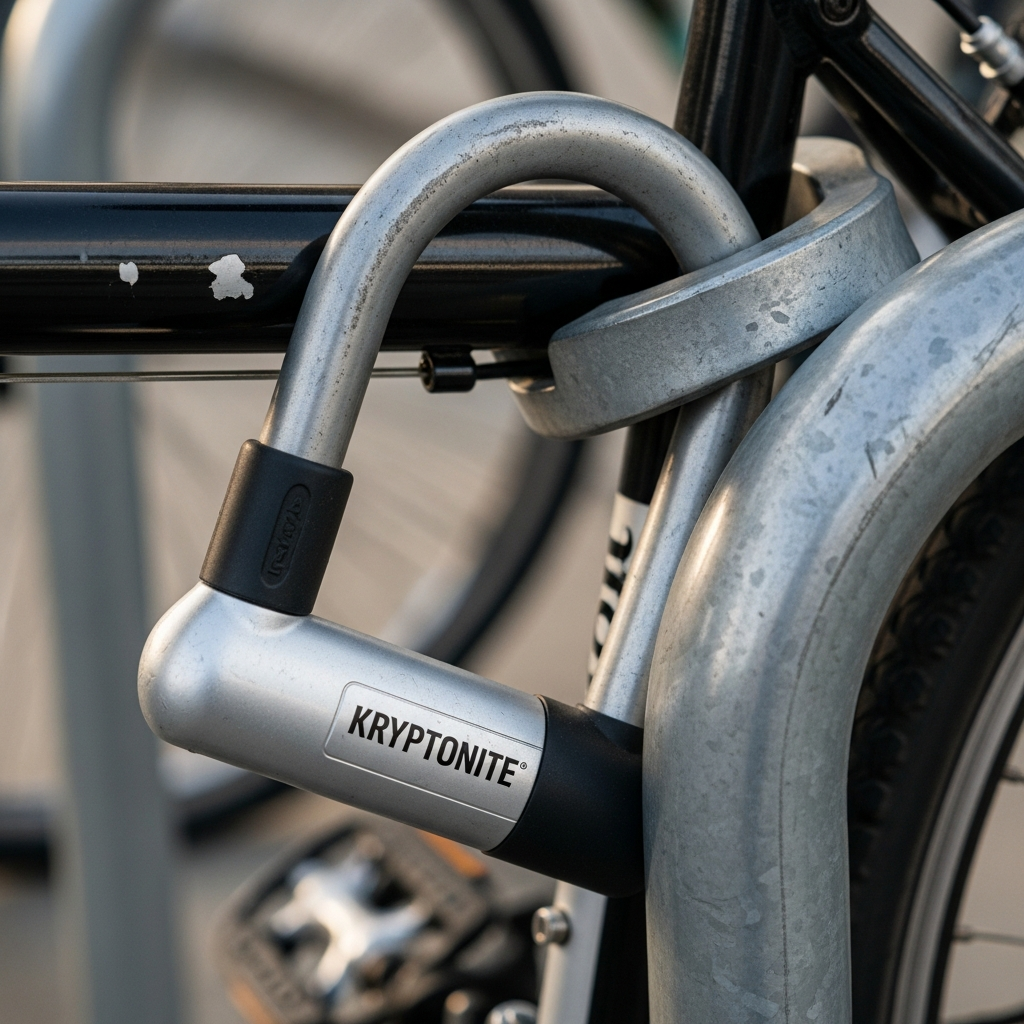
D locks are attacked with leverage. A thief inserts a pry bar or car jack between the U-shackle and twists until the metal fatigues. The smaller the D lock, the less room for leverage — a compact D lock that fits tightly around your frame and rack leaves almost no gap for a pry bar. Larger D locks that leave space inside the shackle are significantly easier to defeat. Angle grinders also work on D locks, but they are loud, conspicuous, and generate sparks — most opportunistic thieves will not use one in public.
Chain locks are attacked with bolt cutters. The chain is only as strong as its weakest link — literally. Cheap chain locks with thin links (under 10mm) can be cut with standard bolt cutters in seconds. Quality chains with hardened 10mm+ links require hydraulic cutters or angle grinders, which puts them in the same inconvenient-for-thieves category as good D locks. The lock cylinder on a chain is also a potential weak point — cheap padlocks on quality chains defeat the purpose.
D Lock Advantages: Maximum Security Per Dollar
A quality D lock — Kryptonite New York Standard, Abus Granit X-Plus, or OnGuard Brute — provides the highest theft resistance at the lowest weight and cost. The rigid U-shackle made from hardened steel resists cutting, prying, and twisting. When sized properly (small enough to eliminate leverage room), a D lock is one of the most difficult locks to defeat without power tools.
Weight matters for commuters. A quality D lock weighs 1.5 to 2.5 kg. A comparable-security chain lock weighs 3.5 to 5+ kg. That weight difference is significant if you are carrying the lock in a bag or on a frame mount every day. My daily commuter D lock lives in a holster on the frame and I forget it is there. A comparable chain lock would be a constant reminder.
The limitation is flexibility. A D lock fits around your frame and one wheel to one rack or post. If the rack is an unusual shape or you need to secure both wheels and the frame, a single D lock cannot do it. You either accept partial security or carry a second lock.
Chain Lock Advantages: Versatility in Real-World Locking
Chain locks excel where D locks struggle: versatility. A 3-foot chain wraps around both wheels, the frame, and a rack in a single pass. You can lock to wider posts, oddly shaped racks, and fences that a rigid D lock cannot reach around. In cities with inconsistent bike parking, that flexibility solves real problems.
For cargo bikes, e-bikes, and bikes that cannot be lifted, a heavy chain lock makes more sense than a D lock. The weight penalty is less relevant when the bike weighs 25+ kg anyway, and the longer reach secures larger frames and wider wheelbases that a D lock cannot span.
Quality matters enormously with chains. A Kryptonite New York Chain or Abus Granit CityChain with 10mm+ hardened links provides legitimate security. A cheap hardware-store chain with a padlock provides the illusion of security — a thief with basic bolt cutters defeats it in under 10 seconds, and experienced bike thieves can spot cheap chain from across the street.
The Verdict: Which Lock for Which Cyclist
Daily commuters: a quality D lock is the right choice for most commuting situations. Lower weight, high security, fits in a frame mount. Size it tight to the frame and rack to minimize leverage room. Add a cable loop through the front wheel if you want full bike security for under $50 additional.
City riders with inconsistent parking: a quality chain lock wins when you regularly lock to different types of infrastructure — wide posts, fences, unusual racks. The flexibility is worth the weight penalty if you cannot predict what you are locking to.
High-theft areas: use both. A D lock on the rear wheel and frame to the rack, plus a chain through the front wheel. Two different lock types require two different attack methods, and most thieves will move to an easier target rather than carrying two different tools.
Budget pick: if you can only buy one lock, buy a quality D lock. Dollar for dollar, a good D lock provides more theft resistance than a chain at the same price point. The Kryptonite Evolution Mini-7 hits the sweet spot — compact enough to resist leverage attacks, hardened enough to resist cutting, and priced around $60-80.


Stay in the loop
Get the latest safe cycling zone updates delivered to your inbox.