
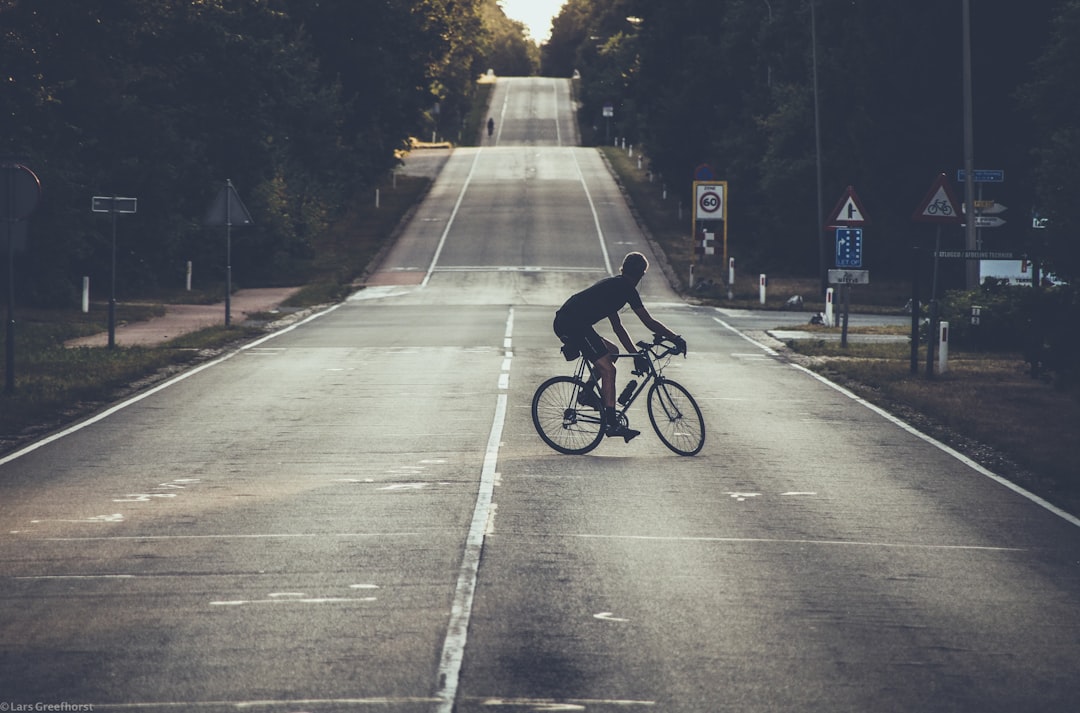
The “safe distance” when cycling depends on context: are we talking about following distance behind other cyclists, how much space cars should give you, or how far to stay from parked cars? Each has different numbers.
Following Distance Behind Other Cyclists
In a group ride, experienced cyclists draft closely—sometimes just inches apart. But that requires trust, communication, and matching skill levels. For casual riding, stay at least one bike length back (about 6 feet). This gives you time to react if the rider ahead brakes suddenly or hits something.
If you’re new to group riding, hang back farther until you’re comfortable reading the movements of riders ahead. Overlapping wheels—where your front wheel is beside someone’s rear wheel—is how crashes happen when people brake unexpectedly.
Space From Passing Cars
Most cycling advocacy groups recommend that cars pass with at least 3 feet of clearance. Many states have codified this into law—look up your state’s “safe passing” requirements.
From the cyclist’s side: ride predictably in a straight line, don’t weave, and take enough of the lane that cars have to consciously move over to pass rather than squeezing by. Hugging the gutter invites close passes.
The Door Zone
Parked cars are dangerous. If someone opens a door into your path at 15 mph, you’re going down hard. Stay at least 4 feet from parked cars—far enough that a swinging door can’t hit you.
This feels wrong at first because you’re taking more of the traffic lane. But a door strike is far worse than making a car wait briefly to pass. Ride outside the door zone and own that space.
Distance from Pedestrians
On shared paths, slow down around pedestrians and give audible warning when passing—a bell or a “passing on your left.” Leave at least 3 feet when going around walkers, more if they have dogs or kids who might move unpredictably.
Pedestrians have right of way on sidewalks and crosswalks. If you’re riding where pedestrians are present, adjust your speed to what’s appropriate for the foot traffic density.
Intersection Positioning
At red lights, position yourself where drivers can see you—not in their blind spot. The “bike box” marked areas at some intersections put cyclists ahead of stopped cars, which is ideal. If there’s no bike box, taking the center of the lane prevents right-hook turns where a car cuts across your path.
General Philosophy
Create space buffers whenever possible. Assume drivers don’t see you, pedestrians might step out, and the cyclist ahead could stop suddenly. The extra distance you maintain is insurance against the moments when other people do unexpected things.




Leave a Reply