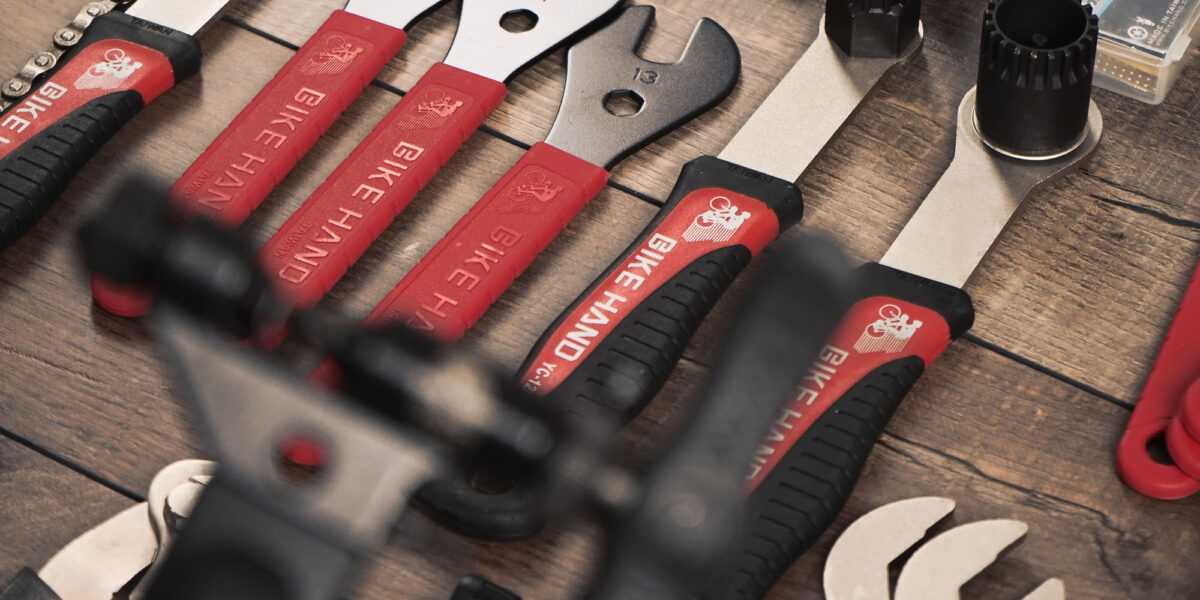
As someone who called off a ride last year because of a loose bolt I could’ve tightened in 30 seconds with the right tool, I learned everything about roadside preparedness the embarrassing way. Now I carry a kit everywhere. That lesson cost me a perfectly good riding day.
The Absolute Essentials
Multi-tool. Find one with hex wrenches from 2-8mm, Phillips and flathead screwdrivers, Torx heads if your bike uses them. Handles most on-the-road adjustments.
Tire levers. Plastic ones work best. Carry at least two. Changing a flat is impossible without them.
Pump or CO2 inflator. Mini pump is slower but provides unlimited air. CO2 is fast but you get one shot. I carry both for any ride over 20 miles.
Spare tube. Correct size for your wheels. Practice installing a tube at home before you’re stranded on the roadside.
Patch kit. Backup for when you suffer multiple flats. Learn the patching technique before you need it desperately.
Home Workshop Additions
Floor pump. Hits higher pressures than mini pumps ever can. Makes pre-ride inflation quick and easy.
Chain tool. Breaks and rejoins chains. Essential for chain repairs that would otherwise end your ride.
Chain wear checker. Tells you when chains need replacement before they destroy your cassette prematurely.
Torque wrench. Carbon bikes especially demand precise tightening. Over-torquing snaps expensive parts; under-torquing lets things work loose.
Nice to Have Eventually
Cable cutters. Brake bleed kit if you run hydraulics. Cassette lockring tool. These become necessary once you progress to more complex maintenance.
Starting Point
Multi-tool, levers, pump, tube. That’s what makes a complete roadside emergency kit. Build from there based on what your specific bike actually needs.