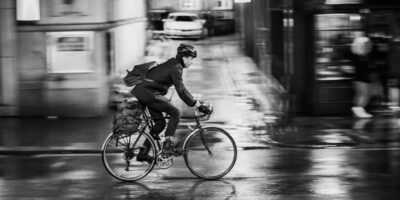
As someone who got hit by a car despite doing everything right – in the bike lane, signaling properly, fully visible – I learned everything about defensive riding through painful experience. Driver turning right, didn’t even look my direction. That crash taught me that “right of way” means absolutely nothing from a hospital bed.

Assume Complete Invisibility
Drivers don’t see you. Not “can’t” – “don’t.” Their brains scan for car-shaped objects in traffic. Your skinny bicycle with its narrow profile simply doesn’t trigger recognition.
Bright colors help somewhat. Lights help more. Movement helps most – slight variations in your line catch peripheral vision more effectively than holding a perfectly straight path.
The Door Zone Reality
Ride at least four feet from parked cars. Doesn’t matter if this positioning puts you in the travel lane. A door opening into you at any meaningful speed causes catastrophic injuries.
Watch through rear windows for movement inside parked vehicles. Someone sitting in a parked car means a door might open any second.
Intersections Are Where Cyclists Die
Most serious accidents happen at intersections. Right-turning vehicles especially. Never pass a car on the right at an intersection – ever. That’s what makes this rule absolute.
Make eye contact with drivers before committing. If you can’t confirm they’ve registered your presence, operate on the assumption they haven’t.
Taking the Lane
Sometimes the safest position is the middle of the travel lane. On narrow roads, through blind curves, anywhere a car squeezing past would create danger.
This is legal in most jurisdictions. Perhaps annoying to drivers behind you, but alive and intact beats polite every time.
Always Know Your Escape Routes
Constantly scan for where you’d go if something happens suddenly. Driveways, shoulders, gaps between parked cars. Plan your emergency exit before you need it.
Defensive riding isn’t paranoid. It’s realistic about how little attention the average driver pays to anything that isn’t car-shaped and directly ahead.