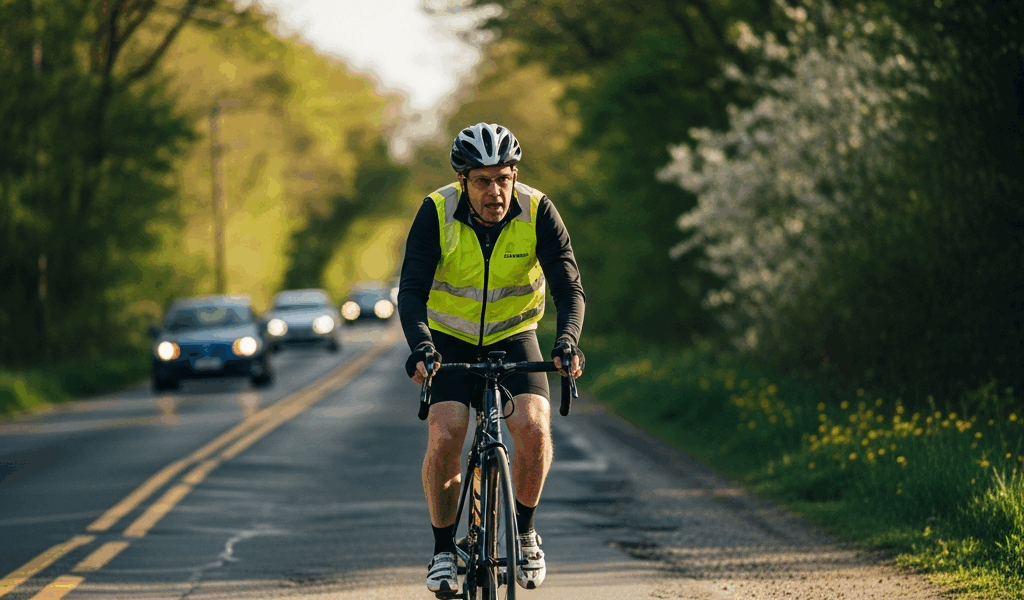
Spring riding is some of the best cycling of the year — longer daylight, comfortable temperatures, and roads that finally aren’t covered in ice or grit. But spring also brings specific hazards that catch riders off guard after a winter off the bike. Here’s what to watch for.
Road Surface Surprises
Winter destroys roads. Potholes that weren’t there in October are everywhere now. Frost heaves create uneven pavement that’s hard to spot at speed. Gravel and sand from winter road treatment collects on shoulders and in corners — exactly where you ride and exactly where you need traction most.
Ride a few miles per hour slower than you normally would for the first few weeks of spring. Scan the road surface further ahead than usual. If you’re riding a route you know well, don’t trust your memory. That smooth stretch from last fall might have a six-inch pothole in it now.
Visibility Is Worse Than You Think
Spring sun sits low in the sky during morning and evening hours — prime commuting and riding times. Drivers dealing with sun glare genuinely cannot see you. This isn’t carelessness on their part. The physics of a low sun angle make a cyclist nearly invisible against a bright background.
Wear bright colors. Use a front light even during the day — a flashing daytime running light is one of the most effective safety tools available. Mount a rear light that’s visible from at least 500 feet. White or light-colored helmets are more visible than dark ones. None of this is overkill. It’s the baseline for being seen.
Assume Drivers Are Rusty Too
Drivers haven’t shared the road with many cyclists over the winter. Their awareness of bikes in traffic is at its lowest point right now. They’re not expecting you on the road, and their mirror-checking habits for cyclists have atrophied. Give yourself extra buffer space at intersections. Be especially cautious at right turns where drivers might not check for a bike before turning across your path.
Your Fitness Isn’t Where You Left It
This is a safety issue, not just a performance one. Fatigue affects decision-making, reaction time, and bike handling. If you’ve been off the bike for three or four months, your first rides back should be shorter and easier than your ego wants them to be. A tired rider who misjudges a corner or reacts slowly to a car door opening is a rider who crashes.
Build back gradually. If you were doing 40-mile rides last fall, start with 15-20 miles this spring. Your legs will come back faster than you expect, but give them two or three weeks before pushing distance or intensity.
Check Your Bike Before You Ride
Tires lose pressure over winter storage. Brake pads may have hardened and lost grip. Cables stretch and shift accuracy drifts. Chains accumulate old lube residue that attracts grit. Before your first real ride, do the ABC check: Air in tires, Brakes working, Chain lubed and running clean.
Spin each wheel and watch for wobble. Squeeze both brake levers and make sure each wheel stops firmly. Shift through every gear. These checks take five minutes and prevent the kind of mechanical failure that puts you on the ground.
Plan for Weather Changes
Spring weather shifts fast. A ride that starts at 60 degrees and sunny can end at 45 degrees and rainy. Carry a packable wind vest or light rain jacket. Arm warmers weigh almost nothing and stuff into a jersey pocket. Getting cold and wet 15 miles from home isn’t just uncomfortable — it affects your coordination and judgment when you need both most. Pack a layer, every ride, until summer settles in.


Stay in the loop
Get the latest safe cycling zone updates delivered to your inbox.